 Loading...
Thinking About Risk in Making Major Decisions
Loading...

 Loading...
Loading...
Loading...
The State and Local Outreach Committee is designed to promote ERM education and professional development by bridging federal, state, and local ERM government entities. This involves creating an inclusive environment for exchanging ideas, sharing effective practices, and discussing common experiences for the betterment of all ERM government practitioners.
The Committee was developed out of national need to start involving various levels of government to start engaging in ERM best practices and educational opportunities. By opening new channels and networks to all public entities that share in the critical need to manage their risks, the true value of ERM emerges for every level of government. Federal government practitioners bring their maturity of experience to state and local practitioners; whereas state and local practitioners bring innovation and agile ideas that may benefit federal practitioners. Bringing together all levels of government ERM practitioners for deep conversation and dialog will benefit all participants by increasing their understanding and awareness of ERM practices and approaches.
2024 will be a pivotal year for AFERM. At the November Summit, AFERM will be announcing the first State and Local Outreach Committee Members to serve and represent state and local government entities implementing ERM across the U.S. These positions include: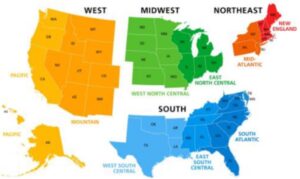
If you are interested in ERM or currently have a program and the state and local level, we encourage to reach out to us and join the state and local outreach group. We are here to build a coalition of ERM professionals at all levels of government. Regardless of where you are at in your ERM journey, our first mission is to just find you! To reach us, please visit us at AFERM’s website at https://resources.aferm.org/committees/
Download the PDFThe ERM Community of Practice (ERM CoP) was created to provide an open forum for enterprise risk management (ERM) professionals from across the Federal Government. The ERM CoP was founded in 2017 after the release of the update to OMB Circular A-123 as a forum for federal employees in ERM to come together to share experiences and get and provide advice to each other. It is led by Treasury’s Deputy Chief Risk Officer. It is comprised of and operated entirely by federal employees from over 50 agencies. This group has been central in mobilizing ERM efforts for the Federal Government including writing and updating the ERM Playbook, creating a Federal ERM Maturity Model, and providing input into other various related guidance and regulations.
The ERM CoP welcomes federal employees who are ERM practitioners for agencies. Non-federal employees are not permitted to join, and the group does not include inspectors general. If you have interest in joining the ERM CoP, please reach out to Karen.Weber@treasury.gov or Andrew.Tiedeman@treasury.gov.
Download the PDFThis Federal Enterprise Risk Management (ERM) Maturity Model was developed by OMB and a pilot group of federal agencies and is included in the latest edition of the ERM Playbook.
Download the ModelThe OIG’s Top Unimplemented Recommendations: Solutions To Reduce Fraud, Waste, and Abuse in HHS Programs is an annual publication of the Department of Health and Human Services, Office of Inspector General. In this edition, they focus on the top 25 unimplemented recommendations that, in OIG’s view, would most positively affect HHS programs in terms of cost savings, program effectiveness and efficiency, and public health and safety if implemented.
Download the ChecklistThis Checklist was discussed during the 2022 ERM Summit Session: ERM Audit Ready. The purpose of this exercise is to analyze the agency’s ERM capabilities as they relate to the CIGIE Inspectors General Guide to Assessing Enterprise Risk Management to more thoroughly assess capabilities and identify areas of focus for future development. Accomplishments and assessments should be considered on a combination of factors, including the agency’s risk profile, risk register, maturity model(s), as well as a SWOT analysis which may be done as part of the ERM team’s annual assessment.
Download the ChecklistThis tool was discussed during the 2022 ERM Summit Session: ERM Audit Ready. The purpose of PART is to foster discussion about programs and/or processes subject to audit and identify opportunities for improvement before an audit begins. The use of the PART can assist management in fulfilling its responsibility for monitoring their internal controls and evaluating the results to ensure they are operating effectively.
Download the Tool
 Reload document
  Open in new tab